Low-cost airlines are already joking about your plan for a minimum price for flights and are offering flights for 9.99 euros. Does that bother you?
Leonore Gewessler*: It saddens me when parts of the industry do not realize the urgency of climate protection. We can only fight the climate crisis together - but everyone must do their bit. But above all it shows that we are doing the right thing with our measures.
But is the minimum price really necessary? It is a company's own fault if it sells its products below cost...
If the tickets only cost 9.90, then the environment and the climate are paying for it. Because somebody always is paying.
With the minimum price or the anti-dumping rule, you have invented something that is making headlines worldwide. Do you know of any concrete efforts in other countries to follow the Austrian example?
The aviation industry is facing major challenges in the fight against the climate crisis throughout Europe. We will need comprehensive measures to make this transformation a success. The Netherlands is also thinking along the same lines.
We can see from the example of the Vienna - Linz route that the transfer works.
When will the minimum price come into force?
We are working on the implementation of all parts of the package for a change of course towards climate protection in aviation.
In addition to the minimum price for air tickets, your government has adopted various other measures to improve the climate footprint of air travel. These include an increase in the ticket levy for short-haul flights of up to 350 kilometers. Have you made calculations as to what effect this will have on Austrian air traffic? And on the climate?
We are facing a major task in climate protection and, above all, major changes that are necessary. These changes affect air traffic in particular. This does not mean that we will no longer fly at all in the future, but it does mean that we will switch to climate-friendly alternatives wherever possible. We want to initiate this change with these measures, because the future is the train, especially on short distances.
Do the 30 euros also apply if someone flies from Vienna via Munich to South America, for example?
As in the past, the air ticket levy applies to the entire ticket - it is highest where the total distance of a ticket is less than 350 kilometres.
Isn't it a risk that people from rural Austria will in future simply travel to Vienna in their own cars instead of fly there?
We can see from the example of the Vienna - Linz route that the transfer to the train works. On short distances, rail is the most attractive option.
We must act, because the climate crisis does not stop.
It would also be possible that certain passengers simply fly from Budapest or Bratislava because of the anti-dumping rule and ticket tax. Or that airlines might even offer more flights from there. Then your measures would be counterproductive in two ways: the effect on the climate would be lost and the added value would be generated abroad.
We have been debating the transfer of flights again and again in recent years and it is quite clear that we will also need European measures. But in the end it is also clear - we must act, because the climate crisis does not stop. And I am glad and also convinced that it is the right decision if we take a first step here. But we will also focus on expanding the alternatives - this is where we are investing a lot of money in them. 500 million in new night trains, for example.
Critics say that such measures must be taken at a pan-European or global level, otherwise they will be of no use...
That will also be needed. But the climate crisis is the most pressing question of our time. And I find it irresponsible to then say - we do nothing because someone else is doing nothing either. We all have a responsibility. The fight against the climate crisis needs courage and it needs people who lead the way. We are doing that now.
As part of the rescue package for Austrian Airlines, the Austrian government has imposed an additional climate condition on the national airline: It may no longer offer flights to destinations where the train takes less than three hours to get there. Isn't that unfair for AUA?
The train connection from Linz to Vienna Airport has shown for years that it can work well and also comfortably. Wherever we create an attractive offer by rail, people change to the train. We are working on this offer - AUA is also cooperating with the federal railway ÖBB - and where this offer exists, AUA will no longer fly.
Is there no risk that another airline will take over the route?
I do not think so. People want to take advantage of the best offer and they want good connections, not to fly at any price. And in the light of the climate crisis, we can no longer fly on every short haul route either. We will create this offer where it is not yet available. And then very few people will still feel the desire to fly on these routes.
Air travel has a future but this future will be different from the present.
But it would also be conceivable that a person from Tyrol, in order to come to Miami, would first fly from Innsbruck to Istanbul, change there and then continue their journey. This would make the distance longer and the emissions would be greater.
We all want to be mobile and we want to make this mobility climate-friendly. This includes long-haul flights from Austria and a good system of rail connections. If we connect these mobility chains well, then they will definitely be the more attractive offer - and then people will go for it.
In terms of climate protection, the aviation industry is pinning its hopes primarily on alternative fuels and, somewhat seldom, on electric motors. How do you see the future?
Air travel has a future - that is undisputed - but this future will be different from the present. It will be much more about long-haul flights and intercontinental routes. Of course, this also includes decarbonization of the engines - there are many approaches to this, but there is also still a great deal of research potential. We want to promote this too.
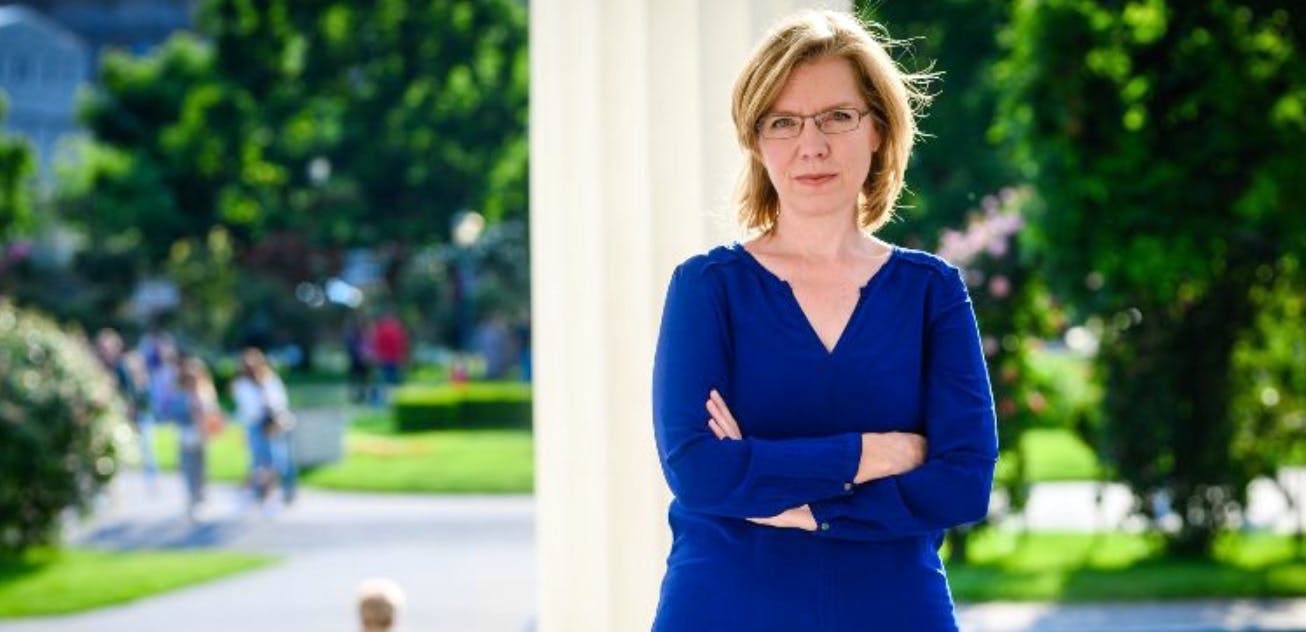
Leonore Gewessler (42) has been Federal Minister for Climate Protection, Environment, Energy, Mobility, Innovation and Technology of the Republic of Austria since January 2020. She graduated in political science at the University of Vienna and subsequently worked in urban development and in leading positions for environmental organisations. She is a member of the Green Party.