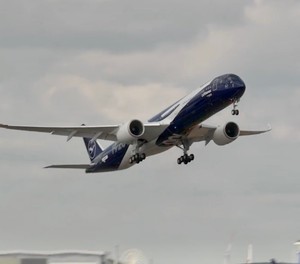
Lufthansa Airbus A380

Instead of national authoritiesLufthansa considers switch to EASA supervision

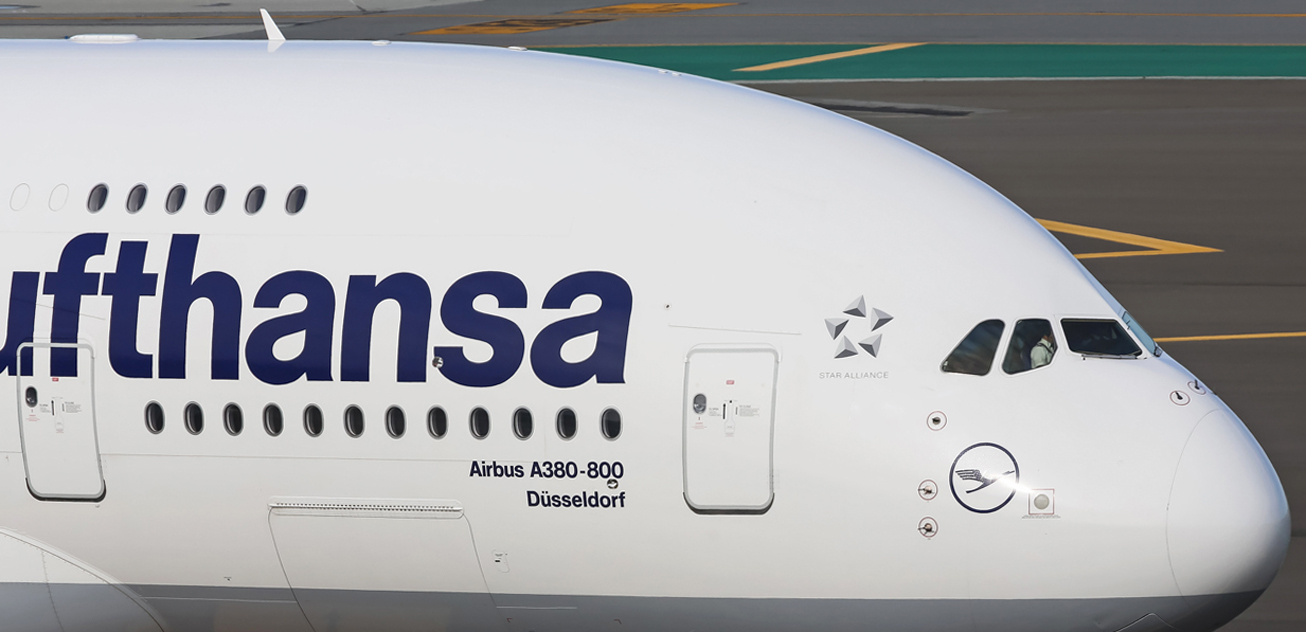
The group is considering placing all its airlines under the central monitoring of EASA. This would help Lufthansa to save costs.

Top-Jobs

Lübeck

Safety Manager (m/w/d) am Flughafen Lübeck

Lübeck
Feste Anstellung
Flughafen Lübeck
Deutschland
Vollzeit
Top jobs
Condor Logo Stelle

Duty Manager Ground Handling Center im Schichtdienst (m/w/d)

Feste Anstellung
Condor Flugdienst GmbH
Deutschland
Vollzeit
Top jobs
Aero-Dienst

Fluggerätmechaniker (w/m/d) als Prüfer / Certifying Staff (m/w/d) EASA Part 66 CAT B1 und/oder B2 für Pilatus

Feste Anstellung
Luftfahrt
Aero-Dienst GmbH
Deutschland
Vollzeit
Top jobs
Aero-Dienst

Fluggerätmechaniker (w/m/d) als Prüfer / Certifying Staff (w/m/d) EASA Part 66 CAT B1 und/oder B2 für Challenger 650

Feste Anstellung
Luftfahrt
Aero-Dienst GmbH
Deutschland
Vollzeit
Top jobs

Antonio Tajani and Karoline Edtstadler, representing the European Parliament, signed an important regulation on 4 July 2018. It became effective two months later. Regulation 2018/1139 replaces various earlier regulations and reorganises many things in the field of aviation supervision.

But the more than 200-page body of rules also opens up new opportunities for European airlines. If they operate in several countries, they can place themselves under the central supervision of the European Union Aviation Safety Agency. Certification, supervision and enforcement will then be carried out by EASA's experts rather than by national authorities.

Simplify procedures

This option caught the eye of the Lufthansa Group strategists. As an international group with airlines in Germany, Belgium, Austria, Italy and Switzerland, it currently has to negotiate with five authorities. These include the German Federal Aviation Authority, the Austrian Supreme Civil Aviation Authority and the Italian Ente Nazionale per l'Aviazione Civile. A central contact person at Easa in Cologne could simplify processes - and help save costs.

«We are examining whether our airlines should be placed under the supervision of Easa,» a Lufthansa spokesperson confirmed to aeroTELEGRAPH. He explains the background to this, saying that the Group is constantly looking at ways in which it could improve its structural position. This includes the new possibility of opening up Regulation 2018/1139. However, no decision has yet been made.

Tough for authorities

The Swiss newspaper «Sonntagszeitung» had previously reported that the Lufthansa subsidiary Swiss could be placed under the control of Easa. Such a change in supervision would not only have consequences for the airlines themselves. The national authorities would also lose their biggest customers - and would therefore probably have to cut jobs.

You can download the EU Regulation 2018/1139 here.
Mehr zum Thema

Flieger von Germanwings: Es gibt Streit.

Lufthansa stellt Germanwings infrage

Flieger von Lufthansa stehen in Frankfurt in Reih und Glied.

Carsten Spohr: Lufthansa wird kleiner

Swiss, Schweiz.

Swiss fliegt nur noch mit sechs Flugzeugen

Airbus A300 Neo von Condor: Der Streit mit Lufthansa schwelt weiter.

Condor sieht sich weiterhin durch Lufthansa behindert – und schließt neue Beschwerde nicht aus

Video

Prototyp der EFlyer 2: Dass Flugzeug soll 2026 von der FAA zertifiziert werden.
Der Eflyer 2 soll im kommenden Jahr zertifiziert werden. Sechs Jahre später als ursprünglich anvisiert. Dafür soll es ein elektrisches Schulungsflugzeug mit sehr geringen Betriebskosten werden, verspricht Hersteller Bye Aerospace.
Benjamin Recklies
Benjamin Recklies
Airbus A321 XLR von Aer Lingus: Das Flugzeug mit der Kennung EI-XLT fällt auf unbestimmte zeit nach einer harten Landung aus.
Ein Airbus A321 XLR der irischen Nationalairline ist am Flughafen Dublin hart gelandet. Das erst ein Jahr alte Flugzeug könnte Monate ausfallen und Aer Lingus Kosten in Millionenhöhe verursachen.
Benjamin Recklies
Benjamin Recklies
Sprung aus der Boeing 737-800 von Air Congo: Riskant.
Die Boeing 737 kam an, doch niemand dachte an die Treppe. Am Flughafen Kindu in der Demokratischen Republik Kongo mussten Reisende von Air Congo ihre Boeing 737 auf denkbar riskante Weise verlassen – per Sprung aus der Kabinentür aufs Vorfeld.
Stefan Eiselin
Stefan Eiselin