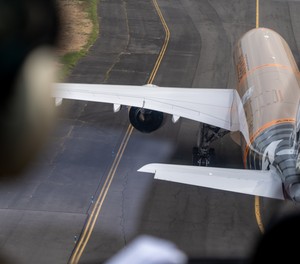
Wake vortices can lead to enormous problems. Two years ago, the turbulence caused by an Airbus A380 sent a German business jet into a 3000-metre dive. Shortly afterwards, a Boeing 777 dislodged tiles of a roof in the vicinity of Geneva Airport with its wake. And an Airbus A350-900 is even suspected of causing the crash of a four-seater propeller plane at Dubai Airport in May 2019.
Wake vortices are long-lasting vortices of air which are produced by every aircraft. They roll up at the wingtips, where the negative pressure of the upper wing surface meets the positive pressure of the lower wing surface. They occur during all flight phases and can cause problems behind the aircraft. In Dubai, for example, the propeller plane was at an altitude of 335 metres and parallel to the Airbus A350 before it was tangled in the turbulence of the wide-body plane.
First measurements show success
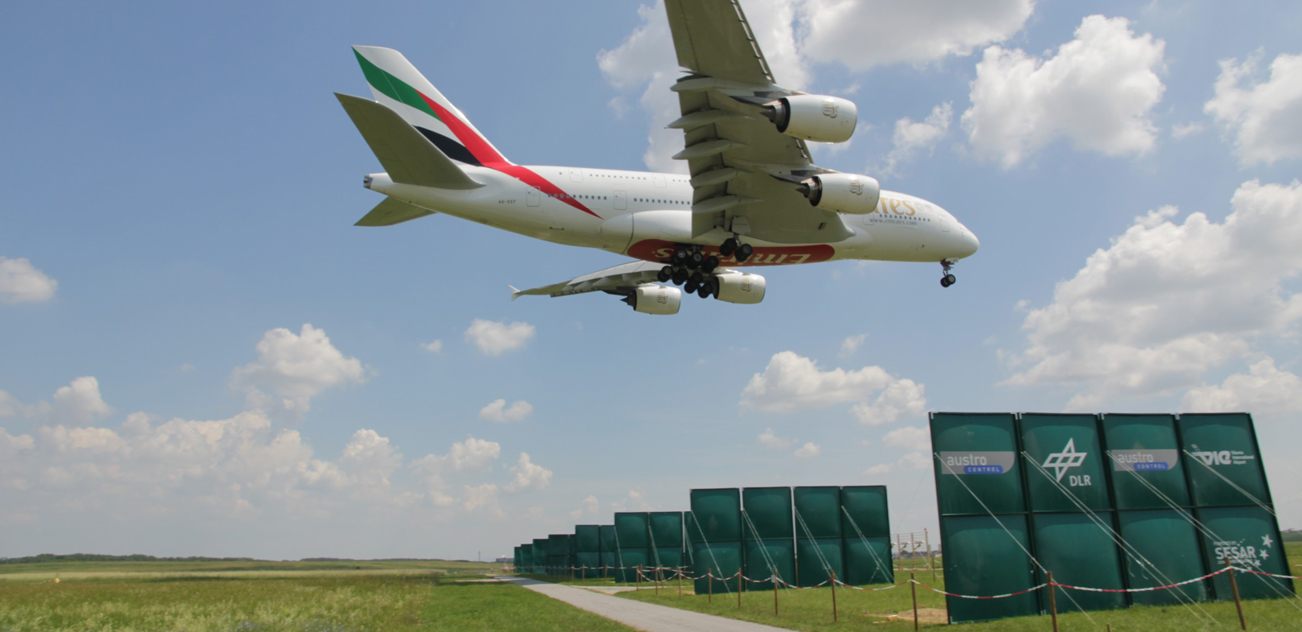
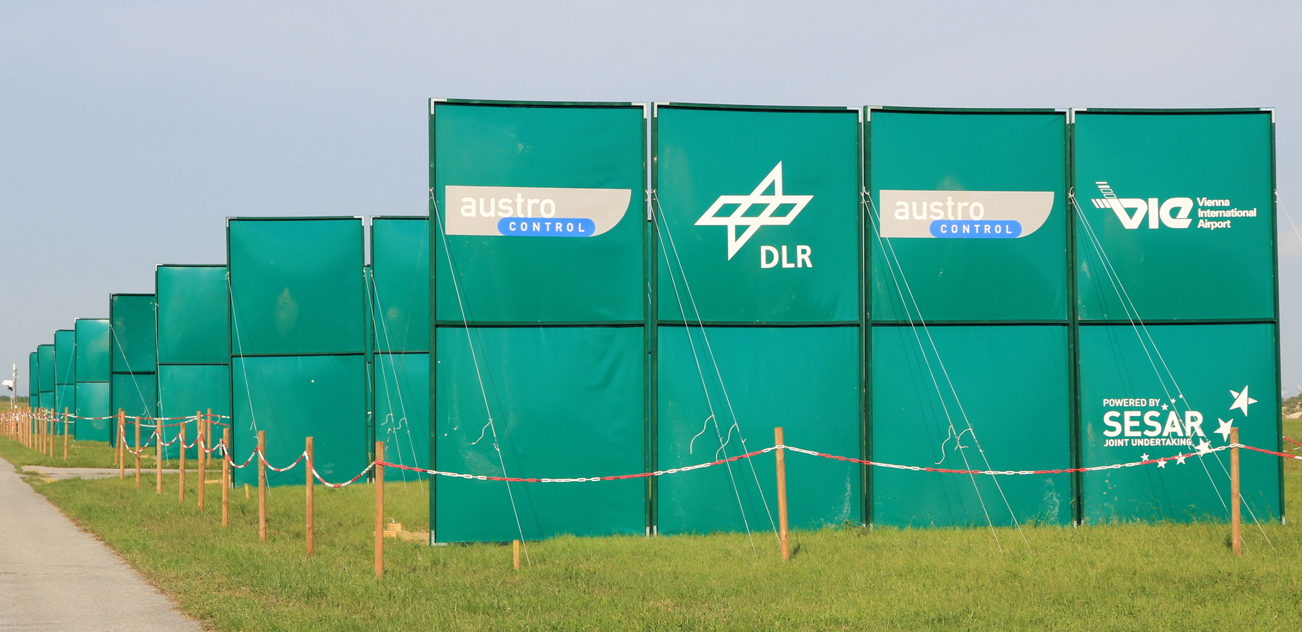
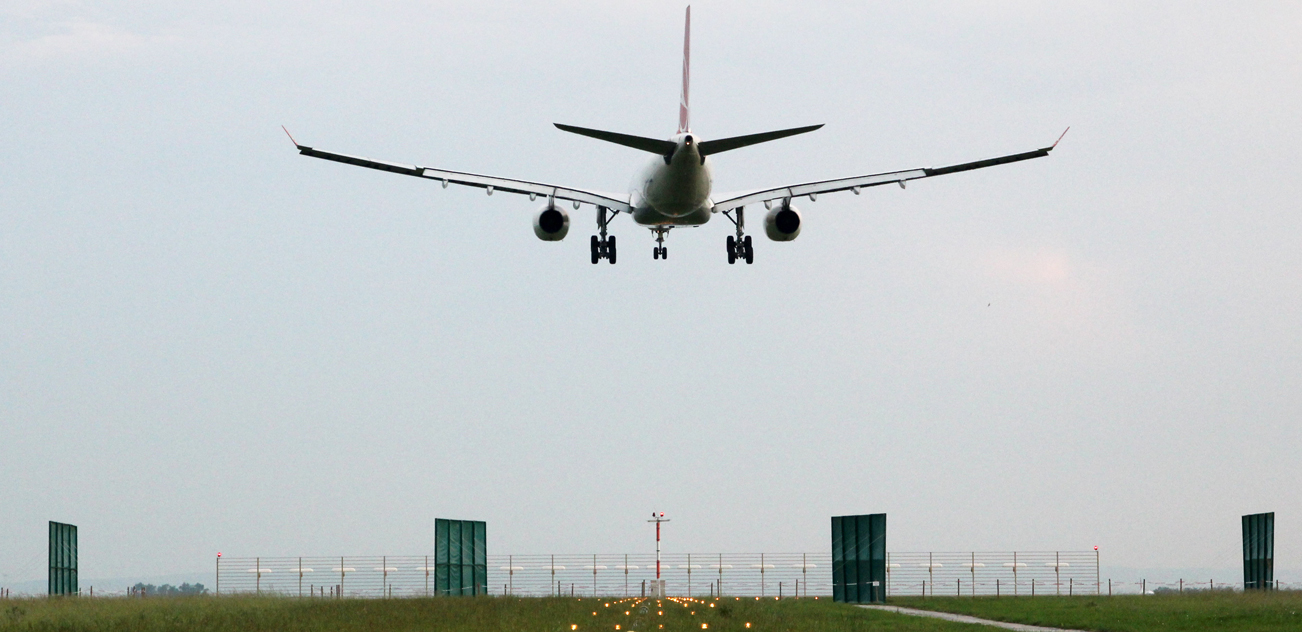
At Vienna Airport, the German Aerospace Center DLR and the Austrian air navigation service provider Austro Control are now working on defusing wake vortices in the approach area. This is to be achieved by setting up rows of plates in the approach area. "While the vortices usually dissolve quickly in higher layers of air, they occasionally remain at surface level just in front of the runway, for some time" explains DLR. This is exactly where aircraft following land.
"In Vienna, Secondary vortices are formed on the plates, which are about nine metres long and four and a half metres high, which cause the actual wake vortices to decay much more quickly. The aim of the EU-funded project is to demonstrate the effectiveness of the plates at a large airport. This has already been demonstrated in flow simulations and individual flight tests. At the Austrian capital's airport, the behaviour of the wake vortices is now being recorded with a laser measuring device. "The very first evaluations of the new measurements in Vienna show that the wake vortices near the plates actually disintegrate much more quickly," says DLR wake vortex researcher Frank Holzäpfel.
Fewer runway extensions necessary?
However, the plates are not only intended to increase safety, but also the capacity of airports. Presently, small and medium-sized aircraft have to maintain a safety distance of around ten kilometres from heavier aircraft in front. If the plates work, smaller planes could "fly behind larger planes at shorter distances, which also has a positive effect on capacity," writes Austro Control.
The DLR even explains: "The construction of new runways at established airports is associated with immense effort. This often also affects settlement areas. "If, in the future, aircraft can land closer together while fully guaranteeing safety, existing systems could be used more effectively and runway extensions avoided," the researchers say.
In the picture gallery above you can see pictures of the plates being tested in Vienna.
A new method to battle vortices
A380 over the so called plate lines...
... which help reducing the effect of wake turbulence in surface area.
Deutsches Zentrum für Luft- und Raumfahrt
This could not only enhance safety, but also increase capacity.
Deutsches Zentrum für Luft- und Raumfahrt