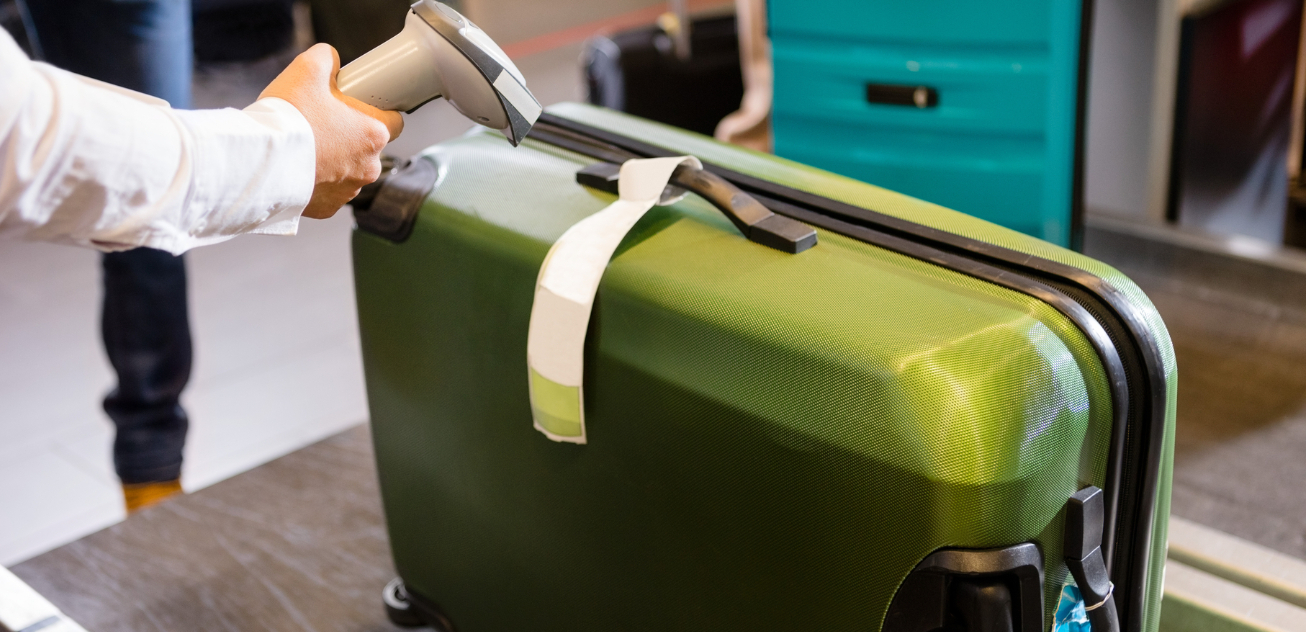
It can be very annoying when a trip begins like this: you arrive at the airport, but without the suitcase you have given up. But at least the chances of getting your lost luggage back quickly are increasing. Since June 2018, the International Air Transport Association IATA has been requiring airlines to track luggage at four points: Baggage check-in, loading onto the plane, arrival in the transfer area and return to the passenger.
The entire process of searching for a lost piece of luggage has now been digitized. In the best case, the traveller receives an e-mail shortly after the loss informing him where his bag has landed by mistake and when he can expect it. However, the system still works on the base of the well-known luggage tags with numbers and barcodes that are attached to the suitcases. If such a label tears off, the piece of luggage can only be assigned to a traveller on the basis of external characteristics such as colour, type, brand and, if necessary, contents.
RFID-Tracking
But this could also be a thing of the past. IATA is pushing ahead with the introduction of Radio Frequency Identification RFID. This involves the contactless identification of baggage tags with integrated RFID chips using electromagnetic waves. Other technology goes even further.
At a conference held by the aviation IT service provider SITA in Lisbon on Wednesday (6 November), the US company Alitheon presented a technology that does not require any labels, tags or chips. Instead, it scans the luggage itself. In the Feature Print process, a camera captures several hundred thousand dots on the surface of each piece of luggage. The result is a data set that makes every suitcase unmistakable and is not much larger than around 100 kilobytes.
Suitcases can withstand stress
«Even if a suitcase is damaged or pulled over the ground with its surface, it will be recognized,» said Heinrich Großbongardt, representative of Alitheon in Europe, about the technology. «In experiments, even objects that have been sandblasted or acid poured over could be identified,» Großbongardt told aeroTELEGRAPH on the sidelines of the conference. The system works with almost all materials, with a few exceptions such as freshly produced glass. But this is irrelevant for luggage. According to Großbongardt, Alitheon is already testing the system with a major US airline.
Alitheon can also imagine using the technology to identify passengers. The company is promoting that the back of the hand should be recorded faster and more accurately than current biometric systems, which are being used at more and more airports. It is also more discreet, as features such as gender and race are irrelevant and the system does not store faces, but only the back of the hand.